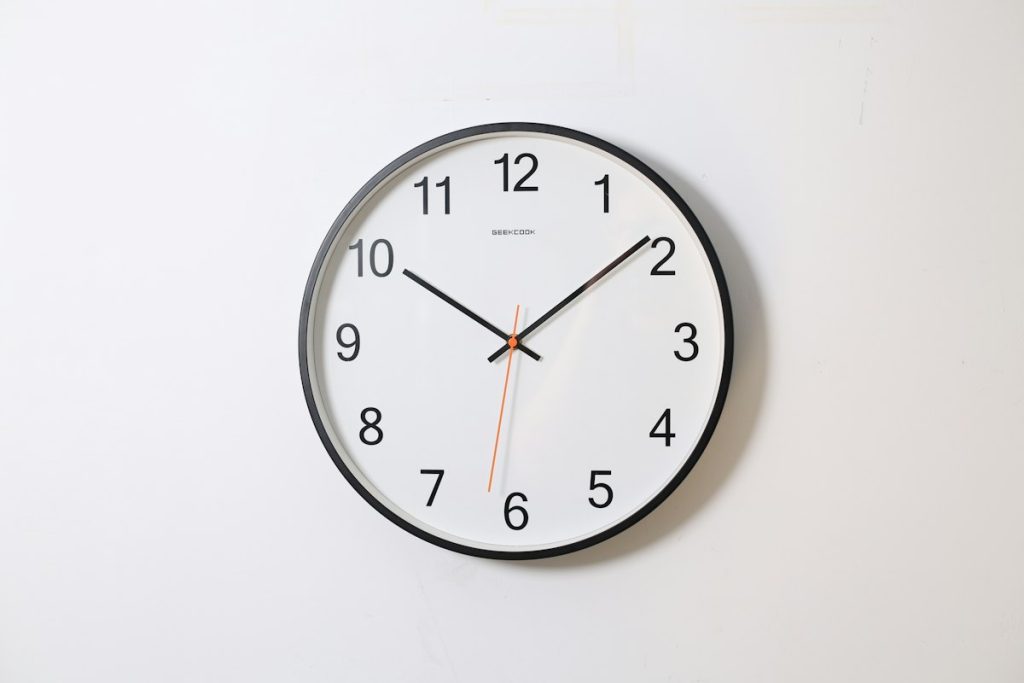

TL;DR / Summary: Replace phone timers that ding mid-savasana with a silent full-screen browser clock. Convert each hold into an absolute end time, glance once, and breathe until the digits land—ideally on a calm live digital clock everyone in the room can see.
Why absolute end times beat countdown beeps
Countdown apps train students to wait for a sound. In a shared studio that sound either startles or forces headphones. Absolute times—“hold until 7:14”—let the teacher watch breath quality instead of managing alerts. Students learn to inhabit the pose instead of negotiating with a progress bar.
A browser clock also survives Bluetooth dropouts and “which phone is hosting the timer?” debates during workshops. When three teachers share a room across a day, a known URL beats a tangle of personal devices with different alarm tones.
Studio setup that keeps necks safe
Cast or mirror a laptop to a TV mounted high enough for supine poses. If you only have a laptop, place it on a low stool at the front edge of the mat grid so necks do not crane sideways. Dim the surrounding desktop; only the clock digits should dominate.
Use a dark theme with large numerals. Decorative second hands are fine; flashing seconds are not. Disable browser notifications for the session profile and close email tabs before anyone arrives in sock feet.
Test readability from the back row while lying down. What looks huge from the teacher’s mat can shrink into a blur for students under string lights.
Writing the hold board before class
On a whiteboard, list pose names with planned durations, then pencil the wall-clock end times once class starts and you know the real begin minute. Example: warrior II for two minutes starting at 6:07 ends at 6:09. Students track the board, not your verbal improvisation.
- Round to whole minutes for beginners; add thirty-second marks only for advanced holds.
- Leave transition buffers so the next pose’s start is not the previous pose’s end.
- Say the end time aloud once, then go quiet—repeat reminders break trance.
If a pose runs long because of hands-on assists, rewrite the next end time instead of pretending the board is still true.
Teacher pacing without a second brain
Keep a small paper cheat strip on your mat with the sequence and duration column only. Mentally add durations to the live clock when you enter each pose. If you lose the plot, glance at the strip and the full-screen live clock, recompute once, and continue—do not unlock your phone.
Assistants can own the board updates while you adjust alignment. Split roles reduce mid-class math errors and keep the room’s attention on bodies, not gadgets.
Workshops with mixed experience
Offer two end times for long holds: a shorter exit for knees that need mercy, a longer target for students who want intensity. Announce both once. The shared clock makes the choice feel fair instead of personal.
For prenatal or injury-aware groups, prefer fewer, clearer targets. Complexity is not sophistication. A single honest end time beats a forest of modifications nobody can track while balancing.
Home practice without studio hardware
Laptop on a dresser, browser in full screen, phone in another room. Write three end times on a sticky note before you start so you are not inventing goals mid-flow. If a hold feels wrong, exit early—the clock is a guide, not a drill sergeant.
Avoid balancing the device on a block you might kick. Falls mid-pose ruin more sessions than soft timing ever will. Pets that bat at glowing screens are another reason for dresser height.
What not to automate
Do not chain smart plugs or voice assistants that announce “time’s up” in a chirpy voice. Do not stream music apps that auto-play ads over the silent clock tab. The aesthetic you want is library quiet with visible time.
Also skip clocks that hide behind login walls mid-class. Prefetch the page during setup and pin the tab. Corporate laptops that sleep after five idle minutes need a power setting change before the first workshop.
Heat, sweat, and hardware care
Hot rooms fog screens. Keep devices out of direct heater blast and wipe with a dry microfiber between classes. Bring a spare HDMI cable; adapters fail at the worst greeting.
Battery laptops should stay plugged in. A dimming screen mid-hold is its own false alarm and teaches students to distrust the tool you just introduced.
Multi-room workshops and borrowed spaces
Community centers often forbid mounting TVs. In that case, elevate the laptop on a sturdy cart centered at the front and announce the absolute times twice as clearly. Borrowed projectors can display the same full-screen clock URL if you mirror rather than stretch a tiny window across a distorted canvas.
Arrive fifteen minutes early to defeat captive portals and auto-updating browsers. Nothing breaks trust like a spinning update wheel during the first warrior hold. Keep a printed sequence card as fallback if the network dies mid-class; durations still convert once you note the wall clock in the hallway.
If two rooms share one teacher floating between them, synchronize both displays to the same URL so shouted end times match what both groups see. Mismatched clocks create the exact beep anxiety you were trying to escape.
Savasana exit without a verbal jolt
End with a final absolute time for savasana exit, lights soft, clock still visible but not discussed. When students learn to trust the digits, you reclaim verbal bandwidth for cues that actually change alignment—and the room stops flinching at phantom timer chimes that never belonged in a quiet practice anyway.